
2026 Business Process Outsourcing Study
BPO Remains Broadly Anchored in Core Enterprise Functions
Cost optimization remains the primary motivation for BPO buyers. Cost savings is the top reason enterprises outsource, followed by efficiency, capacity and access to expertise. Buyers expect providers to deliver lower cost and more work for each dollar spent, while domain knowledge and process judgment remain important differentiators where work is complex or regulated. This reflects a market where BPO is valued not only for labor arbitrage, but for the operational productivity, scalability and expertise that buyers struggle to replicate internally.
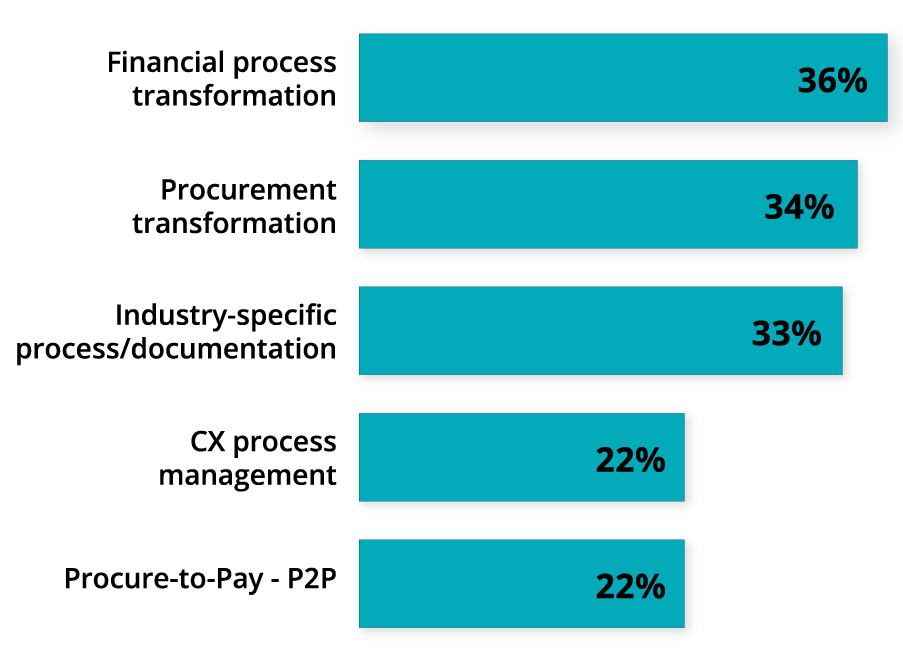
BPO Categories Summary
Transformation Is Underway, but Maturity Varies
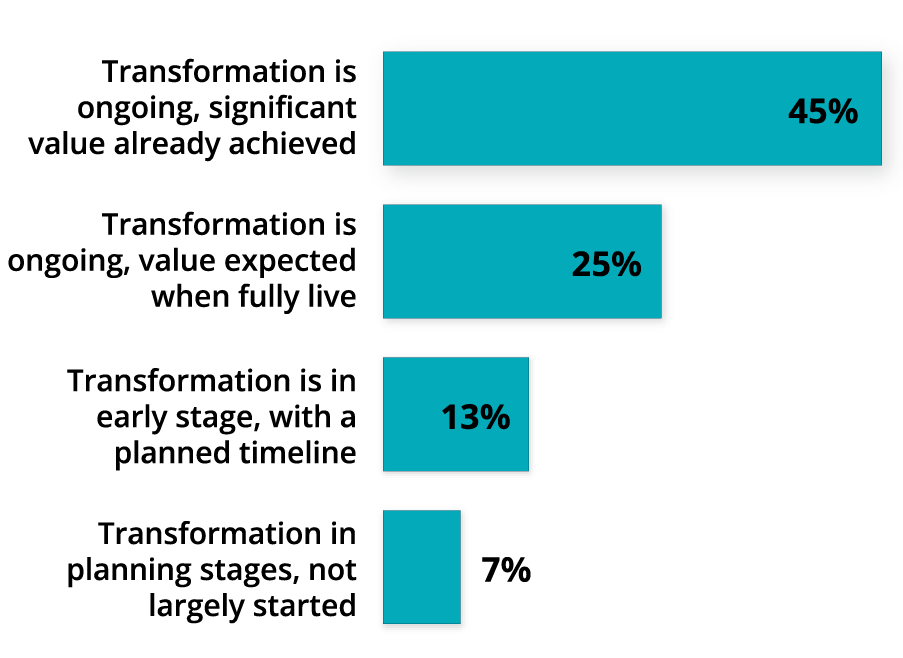
BPO transformation is active across the enterprise, but maturity varies significantly by segment. While more than half of respondents report either AI-enabled efficiency or AI-first outcome delivery, industry-specific services remain the least AI-enabled category — with 58% still in manual or labor-led models and only 6% at AI-first outcomes. The findings point to a market where transformation is underway but unevenly distributed. Customer experience is furthest along. Industry-specific and back-office programs are still weighted toward cost and cycle-time improvement, with outcome-based redesign still ahead for most.
BPO Transformation Journey
AI Is Becoming Central to the BPO Transformation Agenda
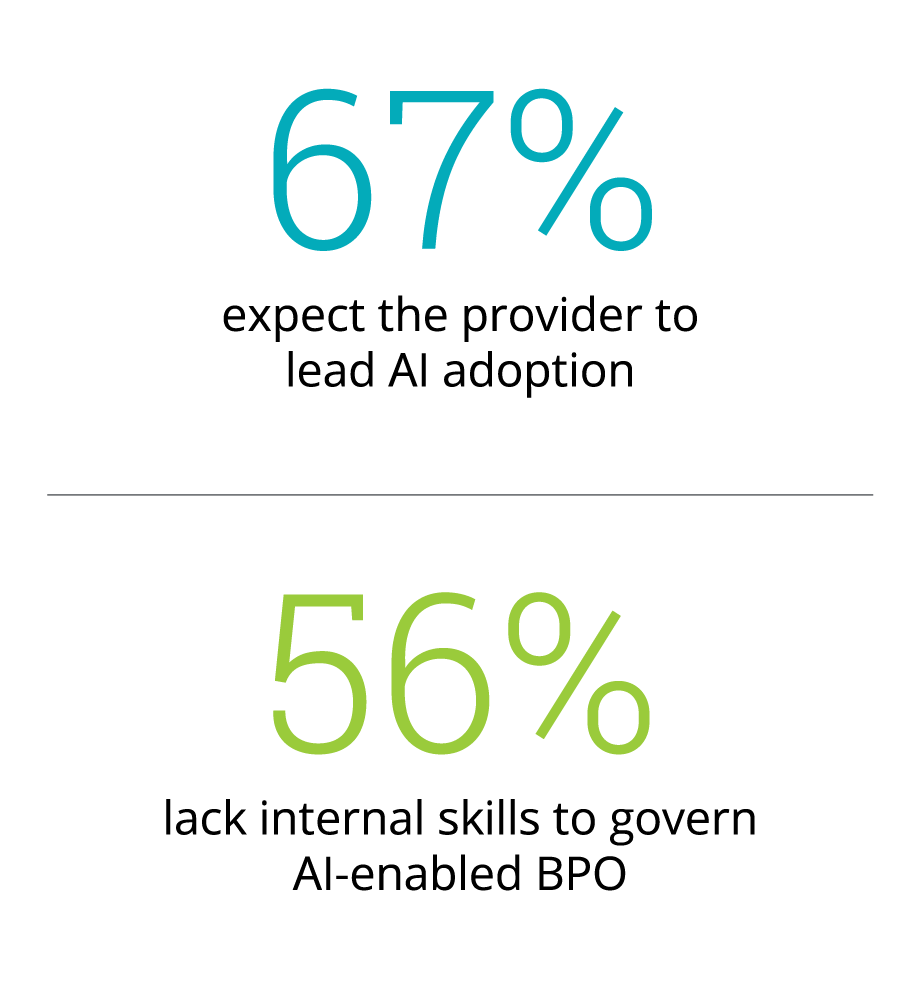
AI is increasingly tied to expectations for BPO transformation. Sixty-seven percent expect their BPO provider to lead AI adoption and not wait for direction, while 65% say they are willing to disrupt existing processes if AI can materially improve outcomes.
At the same time, governance remains a constraint. Fifty-six percent say they lack the internal skills to govern AI-enabled BPO effectively, creating a clear need for stronger operating models, metrics and provider accountability.
BPO AI Transformation Readiness Gap
AI-Led Innovation Is Under-Measured and Underperforming
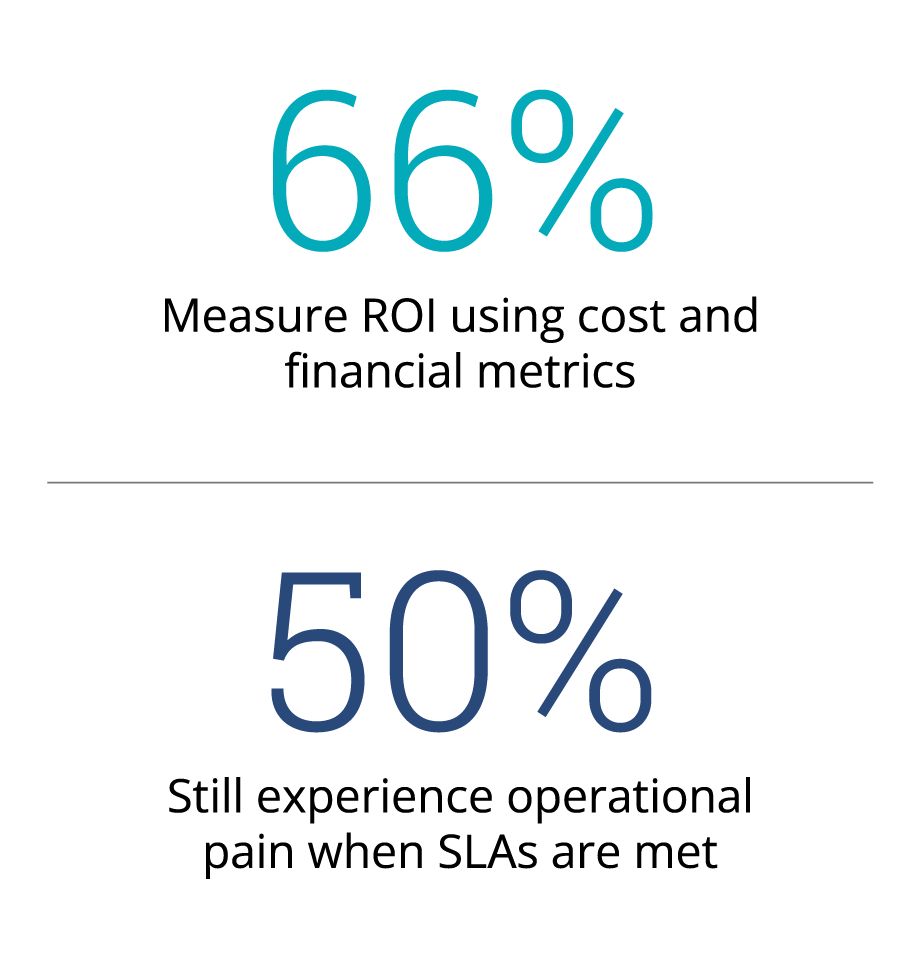
Enterprises are actively measuring BPO value, but measurement remains anchored in cost and operational efficiency. Sixty-six percent measure ROI using cost and financial measures, followed by productivity, service quality and direct business impact. AI-led innovation, however, sits in a different position. It is among the least consistently measured ROI dimensions and one of the lower performers against expectations. If buyers and providers cannot define and track AI value, it becomes harder to govern, price and renew AI-enabled BPO relationships. Closing the measurement gap is not just a reporting issue; it is a commercialization problem.
BPO ROI and Performance Measurement