

Sales performance management (SPM) is undergoing a reinvention. Once viewed as a back-office, compliance-oriented process largely owned by finance, it is now becoming a strategic platform at the heart of modern revenue operations. The rise of artificial intelligence (AI), particularly machine learning (ML), generative artificial intelligence (GenAI), and predictive modeling, is transforming how enterprises align sales behaviors with growth targets. Across planning, compensation design, and seller experience, three AI-driven shifts are reshaping SPM, forcing CROs, CIOs and technology providers to rethink their assumptions. As ISG asserts, through 2026, more than one-half of enterprises will recognize that modernizing processes will be necessary to capture the data needed to enable new GenAI features that aid in maximizing sales effectiveness to achieve revenue targets.
The first shift centers on planning. Territory design, quota allocation and capacity modeling have historically been annual top-down exercises rooted in static data and rearview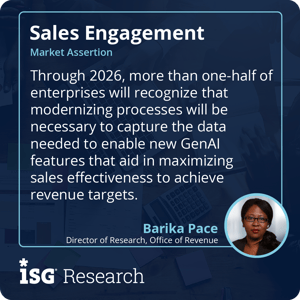 financials. But AI-infused SPM platforms are introducing simulation and scenario modeling that allow revenue leaders to dynamically test plan performance under a range of assumptions: rep attrition, new market entries, economic headwinds or cross-sell initiatives. This creates space for agile strategy correction before market realities expose poor design. Modern SPM platforms are increasingly able to ingest real-time sales performance data, layering in AI to detect pattern mismatches between plan and execution. When those gaps are found, CROs can proactively rebalance territories, shift capacity or return quotas, with evidence-based projections tied to productivity and margin outcomes. The planning cycle is no longer annual. It's continuous.
The second shift involves incentive design. Traditional compensation models assume sellers will be driven by linear accelerators, product mix targets or quarterly draw schedules. But today’s selling environments are nonlinear. They involve hybrid go-to-market motions, buyer-led journeys and a complex interplay between field, digital and partner teams. AI helps decode which elements of a plan are influencing behavior and which are noise. By analyzing historical attainment, discounting behavior, sales cycle variability and win rates, SPM platforms can now generate compensation plan recommendations that optimize for specific behaviors such as multi-product selling, subscription renewals or multi-year contracts. For revenue leaders, this unlocks the ability to iterate on plan design mid-cycle without flying blind. Rather than waiting for end-of-quarter surprises, they can nudge behavior before targets are missed.
This shift is particularly important as organizations look to operationalize new sales strategies tied to ecosystem selling, usage-based pricing or customer success-led renewals. Incentives need to reflect the full revenue lifecycle, not just initial deal close. In practice, this requires deep integration between the SPM platform and upstream systems like CRM, Configure, Price, Quote (CPQ), and product usage of telemetry. AI can connect these dots, but only when the data architecture is ready. That makes this not just a compensation transformation; it’s a systems integration challenge for CIOs.
The third shift is happening at the frontline. GenAI is changing how sellers interact with compensation insights, coaching and day-to-day performance feedback. Instead of receiving static attainment reports, reps can now see real-time earnings projections, plan scenario impacts, and receive targeted suggestions on where to focus based on current pipeline, territory gaps and customer signals. The behavioral impact is significant. When sellers understand how their actions map to their earnings in a clear, contextualized way, motivation increases. Attrition drops. Onboarding speeds up. Organizations with advanced SPM implementations are embedding these insights into seller workflows, within CRM, mobile devices and sales enablement tools, making the SPM platform a daily utility rather than a quarterly surprise.
The implications of these shifts extend beyond the sales organization. For CFOs, SPM becomes a forecasting asset, providing forward visibility into compensation liabilities, margin scenarios and plan effectiveness. AI-enhanced plan modeling allows finance leaders to simulate cost impact and revenue outcomes before making design changes, improving alignment between growth goals and capital discipline. For CHROs, real-time SPM data provides a lens into rep satisfaction, engagement and performance equity. AI can flag sellers who are on track to miss earnings despite high effort, suggesting deeper issues with enablement, plan fairness or support. This creates a new role for SPM in shaping the employee experience. And for CIOs, these shifts demand a composable technology stack. SPM can no longer live in isolation. It must exchange data with CRM, ERP, HRIS, CPQ, and customer success platforms, in real time, with embedded trust and lineage.
In parallel, the market is demanding faster time to value. Long implementation cycles and rigid plan logic no longer fit the pace of go-to-market change. Providers must prioritize ease of configuration, support for agile plan governance and out-of-the-box analytics that link SPM to business impact. As buying centers shift from finance to RevOps and CROs, providers must speak the language of growth, not just compliance.
Sales performance management is no longer a toolset. It is a platform capability that bridges strategy and execution. AI is accelerating this evolution, but its effectiveness will depend on the underlying design choices of both the enterprise and the provider. For organizations willing to modernize how they plan, incentivize and support sellers, SPM will become a competitive advantage, not just a payout engine. The next phase of revenue performance will be shaped by those who can turn compensation into strategy and data into behavior. AI is the catalyst. The window is now.
Regards,
Barika Pace
Fill out the form to continue reading.