

I have previously described the critical importance of context for enterprise adoption of generative artificial intelligence (GenAI) and agentic AI. Establishing trust in the content generated by GenAI is facilitated by grounding the models with real-world context from enterprise content and data, while AI agents designed to make context-aware decisions and take automated actions based on perception and reasoning cannot do so without defined business context and policy constraints. Alation is a prime example of how data intelligence software providers are evolving their products to address this need for context by providing a data knowledge layer that facilitates a holistic understanding of data products to support the implementation of AI agents.
Alation was founded in 2012 and was one of the primary originators of the market for data catalog software products. A data catalog surfaces metadata from data platforms, tools and applications to provide an inventory of data assets that can be used to understand how and when data is produced and consumed. Many of the early data catalog startups focused on the identification and extraction of technical metadata to provide an inventory of the location, structure and schema of enterprise data. In addition, Alation was early to identify the importance of natural language search capabilities to enable business users and data analysts to discover and access data on a self-service basis. Alation’s Agentic Data Intelligence Platform today addresses a variety of enterprise data requirements, including data cataloging as well as data governance, data lineage and data quality, as well as the development and sharing of data products and natural language analysis of data production and consumption metrics. Alation was rated as Exemplary in ISG’s 2025 Buyers Guides for Data Intelligence, Data Governance, Data Quality and Data Products, as well as a Provider of Assurance in ISG’s 2025 Buyers Guide for Data Management. The company has more than 650 customers, more than 500 employees and has raised $340 million in venture funding, including a $123 million Series E round announced in late 2022.
I assert that through 2028, data catalog providers will evolve their products to support data intelligence by prioritizing delivery of knowledge graph and data product platform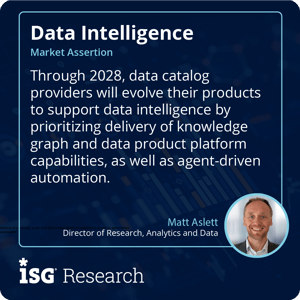 capabilities, as well as agent-driven automation. Alation has already made significant progress toward that goal, having introduced a series of new capabilities over the past 12 months. In March 2025, the company rebranded its core product as an Agentic Data Intelligence Platform and introduced a new AI Agent SDK designed to enable enterprises, as well as software and service providers, to create AI agents that take advantage of Alation’s data intelligence capabilities. This includes access to trusted data and metadata, and governance and lineage information via Model Context Protocol. The Agentic Data Intelligence Platform serves employees in multiple roles, including data governance, data stewardship and data administration, but the company is increasingly positioning it as providing the knowledge layer capabilities required by AI agents to automate decision-making and action execution. Support for agentic workloads was expanded by the acquisition in May 2025 of Numbers Station, which specialized in researching the confluence of AI agents and structured data workflows. The combination of this expertise and Alation’s AI Agent SDK functionality resulted in the delivery, in October 2025, of Alation Agent Studio to enable users to create agents grounded by an agentic knowledge layer provided by the platform’s combination of metadata, governance, lineage and data quality capabilities.
March 2025 also saw Alation deliver the first of its own data agents designed to enhance and automate data administration tasks. Alation’s Data Documentation Agent is designed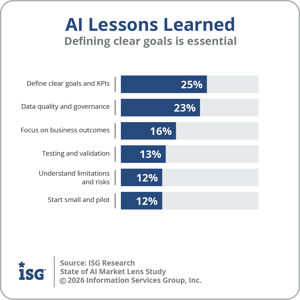 to automatically identify relationships between business concepts and technical metadata and to provide suggested descriptions to accelerate data asset documentation. The Data Quality Agent is designed to generate recommended data quality rules and automatically monitor data sources to identify and explain data quality issues. Alation has also introduced Alation CDE Manager, which takes advantage of declarative governance agents to automate governance in accordance with critical data elements—the fundamental datapoints and attributes that define an organization’s processes and goals. Alation’s Data Products Builder Agent was launched in May and is designed to facilitate the development of curated data products to be published and discovered via Alation’s Data Products Marketplace. The concept of data products facilitates an outcome-led focus for data and AI initiatives. Applying product thinking to data initiatives establishes the desired business outcome as the focal point for the assessment of the processes and data required to deliver that outcome, as well as the identification of the organizational goals and metrics that will be used to measure its success. Alation enables users to identify, monitor and measure metrics related to data initiatives through Alation Analytics. The importance of key performance indicators was highlighted by ISG’s 2025 State of AI Study, with 25% of participants listing the definition of clear goals and KPIs as a core lesson learned from their AI initiatives that they would pass on to their peers. The criticality of data quality and data governance was listed by 23% followed by the importance of focusing on business outcomes listed by 16%. Alation Analytics supports natural language analysis of adoption trends, usage patterns and performance metrics by data administrators, while the company has also added vibe analytics capabilities for business users through the introduction of Alation Chat with Your Data.
Alation remains best known as a data catalog provider, but has significantly expanded the capabilities of its product offering in the last year with support for AI agents and the delivery of data agents. As enterprises accelerate their use of AI agents, a data knowledge layer that can support the creation of AI agents while also being part of the agentic process will quickly become not just desirable, but essential. I recommend that enterprises exploring the potential benefits of AI agents assess the data management capabilities required to support AI agents and include Alation in their evaluations to understand how its Agentic Data Intelligence Platform and data agents can automate and accelerate key data processes.
Regards,
Matt Aslett
Fill out the form to continue reading.