

Let's be blunt: The pressure to adopt AI in HR is a panic button being hit by the C-suite. The mandate from the boardroom is clear, and the pressure is intensifying: HR must adopt AI to remain competitive. This directive often lands on the desks of HR leaders who are already managing complex environments, creating a dangerous disconnect between executive ambition and operational reality.
The initial reflex is to engage in immediate action—to purchase tools that promise autonomous agents and predictive modeling—believing the right software is a shortcut to transformation. But this is a fundamental miscalculation. It is like trying to fix a toxic culture by buying everyone a subscription to a shiny new employee engagement app. You’ve spent the money, you’ve installed the tech, but the underlying issue of bad leadership, inconsistent policy and manual friction remains, ensuring the new tool will fail, and fail fast. As observed in the ISG State of HR Technology and Service Delivery Report, the surge in AI investment is creating a governance debt that organizations are completely unprepared to pay. The rush to buy intelligence on top of broken processes is the precise mechanism for the "wipeout."
We need to stop accepting the software provider narrative that a new feature set will magically solve your foundational problems. It is true that software can solve many problems in ideal environments with specific circumstances. But it cannot universally solve every problem. The most sophisticated AI application in the world is, at its core, an accelerator. Feed it clean, standardized data from a harmonized process, and it will deliver measurable, strategic value. Feed it the messy, inconsistent data generated by decades of siloed operations and manual workarounds, and it will produce confidently delivered, yet structurally flawed, outputs.
The challenge for today's HR leader is not selecting the right algorithm; it is having the courage to admit that the organization’s current operational health cannot support the technology it is being pressured to buy. You are being forced into the role of a risk manager and a data architect, and that starts with auditing the garbage you are preparing to automate. The market opportunity for enterprises lies not just in efficiency, but in leveraging AI to link workforce agility and employee experience directly to business outcomes. Yet this cannot be achieved until the underlying data is trustworthy.
This disconnect between the executive mandate and operational readiness is a consistent theme I observe at enterprises all too often. Companies are successfully finding (or allocating) budget for innovative technology, but are simultaneously neglecting the unglamorous, absolutely essential work of data harmonization and standardizing operational processes. More than half (54%) of enterprises participating in our Data and AI Programs Market Lens study indicated that data usability for AI applications was the biggest data challenge.
This infrastructure deficit underpins my core assertion that by 2027, fewer than half of enterprises deploying AI in HR technology will be fully prepared to govern, scale and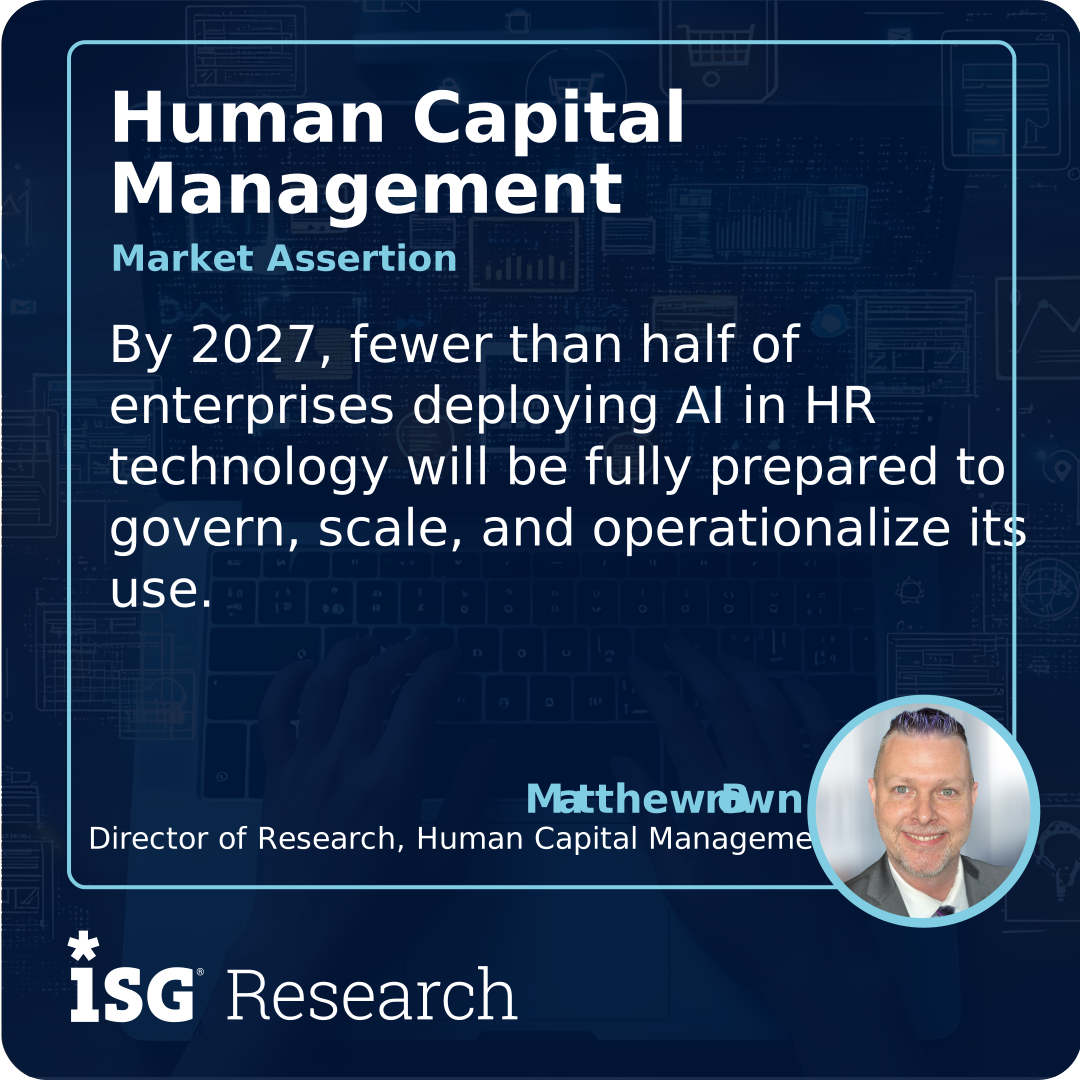 operationalize its use. We are already seeing the cost of this lack of preparation as organizations get stuck in "pilot purgatory"—running expensive experiments that cannot be deployed enterprise-wide because no one has established clear, legal ownership or auditable standards for the algorithmic output. When the AI makes a non-compliant recommendation, the technical bug is only a symptom of an organizational gap in accountability.
This issue substantially impacts the entire HR technology ecosystem. For software providers, the implication is a short-term sales boost followed by long-term customer dissatisfaction and increased churn, as advanced features fail to deliver ROI in unprepared customer environments. For customers, the impact is a massive loss of budget, a critical erosion of HR credibility within the C-suite, and, most importantly, the risk of embedding bias and non-compliance into core workforce processes at warp speed. And for partners—the system integrators and consultants—the challenge is shifting from a focus on implementation speed to a necessary, and slower, focus on foundational data and process design before the platform is even touched. The next generation of successful transformation requires partners to push back on unrealistic timelines and insist on the painful, necessary remediation work first.
The enterprises that will win in this new AI era are not the ones that bought the most licenses, but are the ones that had the discipline to fix the foundation first. These organizations treat governance, integration and data architecture as competitive advantages. Leaders understand that AI must be earned, not bought, and realize that operationalizing AI at scale is a transformation effort, not just a technical upgrade. Success for these companies is built on the courage to challenge the executive mandate for speed and insist on stability first.
Do not let the fear of being perceived as slow push you into a reckless, expensive decision. Your job is to deliver measurable value, not to be a software provider’s proof of concept. To secure your organization and avoid the inevitable wipeout, HR leadership must take immediate, uncompromising action. Stop all AI initiatives lacking a defined governance owner. If you cannot name the specific executive responsible for signing off on the legal and ethical integrity of every algorithmic output (the person who takes the call from Legal when an error occurs), the program is too immature to proceed, and you should consider shutting it down.
Leaders who find themselves in this position should consider redirecting next quarter's planned AI software budget to data remediation, because until your core job architecture, data definitions and processes are standardized, any investment in advanced functionality is a waste of capital and will yield no measurable ROI. Finally, force a confrontation with your current operating model, demanding that your team move past making minor improvements to existing inefficient pathways. Making “the way it’s always been” faster isn’t a recipe for success. The only acceptable path is to eliminate the existing system entirely, unifying your processes and establishing a single, non-negotiable source of truth before attempting any automation. The technology is ready; the question is, are you?
Regards,
Matthew Brown
Fill out the form to continue reading.