

Analyst Perspectives


Search within Analyst Perspectives blog:

TopBar Analyst Perspectives BottomBar
  • Available Posts: 0

Anaplan, a provider of cloud-based business planning software for sales, operations, and finance and administration departments, recently implemented its new Winter ’14 Release for customers. This release builds on my colleagues analysis on their innovation in business modeling and planning in 2013. Anaplan’s primary objective is to give companies a workable alternative to spreadsheets for...

Read More

Topics: Big Data, Performance Management, Planning, Predictive Analytics, Sales Performance, Supply Chain Performance, Marketing, Office of Finance, Operations, Reporting, Budgeting, Controller, Operational Performance, Business Analytics, Business Performance, Cloud Computing, Financial Performance, In-memory, Workforce Performance, CFO, Sales Planning, Financial Performance Management, financial reporting, FPM, Integrated Business Planning


In the past year Kronos announced a major release of its Workforce Central suite and more recently, made an announcement regarding a major investment that should help keep the company well capitalized. Kronos is one of the largest vendors of workforce management systems, providing time and attendance, labor scheduling, absence management, HR management, payroll and recruiting applications. In...

Read More

Topics: Mobile, Social Media, Governance, HCM, Kronos, Office of Finance, Technology Innovation Award, Business Analytics, Business Collaboration, Business Intelligence, Cloud Computing, Collaboration, Workforce Performance, compliance, HR, HRMS, Risk & Compliance (GRC), Value Index, Workforce Management, Social


There’s a growing realization that the multitenant approach to the cloud isn’t the only option that companies should weigh in deciding between deploying software on-premises and in the cloud. That some people describe the multitenancy approach as “the real cloud” reflects the contentious nature of some technical debates, especially those that occur early in the evolution of a new technology....

Read More

Topics: Microsoft, Mobile, SaaS, Sales, Salesforce.com, ERP, HCM, Human Capital, Office of Finance, Planview, Concur, Dynamics AX, Dynamics GP, Dynamics NAV Dynamics SL, PSA, Sage Software, Unit4, Analytics, Business Performance, Cloud Computing, Financial Performance, Workforce Performance, CFO, FinancialForce, HR, Infor, Tagetik, Workday, Plex


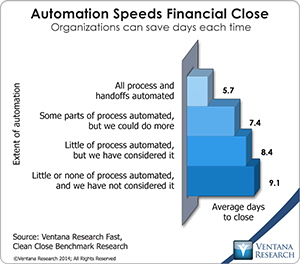
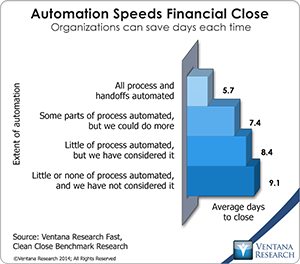
Reconciling accounts at the end of a period is one of those mundane finance department tasks that are ripe for automation. Reconciliation is the process of comparing account data (at the balance or item level) that exists either in two accounting systems or in an accounting system and somewhere else (such as in a spreadsheet or on paper). The purpose of the reconciling process is to identify...

Read More

Topics: Office of Finance, automation, close, closing, Consolidation, Controller, effectiveness, Reconciliation, XBRL, Business Performance, Financial Performance, Governance, Risk & Compliance (GRC), CFO, Data, Document Management, Financial Performance Management, FPM


Information technologists are fond of predictions in which the next big thing quickly and entirely renders the existing thing so completely obsolete that only troglodytes would cling to such outmoded technology. While this vision of IT progress may satisfy the egos of technologists, it rarely reflects reality. Mainframes didn’t disappear, for example. Although they long ago lost their dominant...

Read More

Topics: Microsoft, SaaS, Sales, Salesforce.com, ERP, HCM, Human Capital, Office of Finance, Dynamics AX, Dynamics GP, Dynamics NAV Dynamics SL, PSA, Sage Software, Unit4, Analytics, Business Performance, Cloud Computing, Financial Performance, CFO, FinancialForce, HR, Infor, Workday, Plex, Professional Services Automation


Convergence is the Microsoft Dynamics business software user group’s meeting. Dynamics’ core applications are mainly in the accounting and ERP category, descendants of products Microsoft acquired: Great Plains (now GP), Solomon (SL), Navision (NAV) and Damgaard’s Axapta (AX), to which Microsoft has added its own CRM application. It has been more than a decade since the acquisitions of Great...

Read More

Topics: Microsoft, SaaS, Sales, Sales Performance, Salesforce.com, ERP, HCM, Human Capital, Office of Finance, Consulting, distribution, Dynamics AX, Dynamics GP, Dynamics NAV Dynamics SL, PSA, Sage Software, Unit4, Operational Performance, Analytics, Business Performance, Cloud Computing, Customer & Contact Center, Financial Performance, CFO, FinancialForce, HR, Infor, Workday, Plex, Professional Services Automation


When it comes to making a business case for software investments, many people fail to recognize that the case itself is just one part of what amounts to an internal sales and marketing effort that they must perform well to be successful. Focusing only on the numbers and assumptions in a spreadsheet is not enough. Making a successful business case requires an understanding of the audience’s...

Read More

Topics: Planning, Sales Performance, Supply Chain Performance, ERP, Office of Finance, Research, budgeting and planning, ROI, Operational Performance, Analytics, Business Performance, Customer & Contact Center, Financial Performance, Workforce Performance, CFO, CRM, business plan, capital spending, Financial Performance Management, FPM, SCM, Software


FinancialForce recently introduced FinancialForce ERP, a family of cloud-based software designed to support a variety of customer-centric businesses such as professional services organizations or companies that specialize in business and industrial distribution. Many of these types of businesses are midsize or small (having 50 to 1,000 employees) and can benefit from the integration of...

Read More

Topics: SaaS, Sales, Sales Performance, Salesforce.com, Supply Chain Performance, ERP, HCM, Human Capital, Office of Finance, Consulting, distribution, PSA, Unit4, Operational Performance, Analytics, Business Performance, Cloud Computing, Customer & Contact Center, Financial Performance, Workforce Performance, FinancialForce, HR, Professional Services Automation, SCM


A core objective of my research practice and agenda is to help the Office of Finance improve its performance by better utilizing information technology. As we kick off 2014, I see five initiatives that CFOs and controllers should adopt to improve their execution of core finance functions and free up time to concentrate on increasing their department’s strategic value. Finance organizations –...

Read More

Topics: Big Data, Performance Management, Planning, Predictive Analytics, Sales Performance, Supply Chain Performance, Office of Finance, Budgeting, close, dashboard, PRO, Tax, Analytics, Business Analytics, Business Collaboration, Business Performance, CIO, Customer & Contact Center, Financial Performance, In-memory, CFO, Supply Chain, CEO, demand management, Financial Performance Management, FPM, S&OP


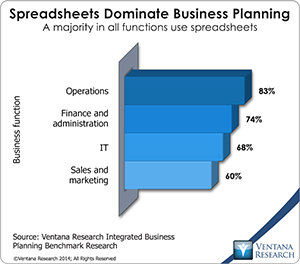
Our benchmark research on enterprise spreadsheets explores the pitfalls that await companies that use desktop spreadsheets such as Microsoft Excel in repetitive, collaborative enterprise-wide processes. Because people are so familiar with Excel and therefore are able to quickly transform their finance or business expertise into a workable spreadsheet for modeling, analysis and reporting, desktop...

Read More

Topics: Sales Performance, GRC, Office of Finance, Reporting, enterprise spreadsheet, Operational Performance, Analytics, Business Analytics, Business Collaboration, Business Performance, Cloud Computing, Customer & Contact Center, Financial Performance, Governance, Risk & Compliance (GRC), Information Applications, Information Management, Workforce Performance, Risk, benchmark, Financial Performance Management


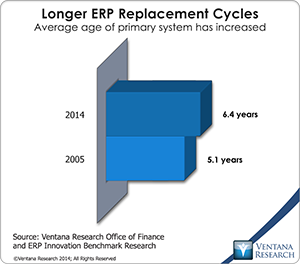
Senior finance executives and finance organizations that want to improve their performance must recognize that technology is a key tool for doing high-quality work. To test this premise, imagine how smoothly your company would operate if all of its finance and administrative software and hardware were 25 years old. In almost all cases the company wouldn’t be able to compete at all or would be at...

Read More

Topics: Big Data, Planning, Predictive Analytics, Governance, GRC, Office of Finance, Budgeting, close, Tax, Analytics, Business Analytics, Business Collaboration, Business Performance, CIO, Cloud Computing, Financial Performance, Governance, Risk & Compliance (GRC), In-memory, CFO, Risk, CEO, Financial Performance Management, FPM


Integrated risk management (IRM) was a major theme at IBM’s recent Smarter Risk Management analyst summit in London. In the market context, IBM sees this topic as a means to differentiate its product and messaging from those of its competitors. IRM includes cloud-based offerings in operational risk analytics, IT risk analytics and financial crimes management designed for financial institutions...

Read More

Topics: Supply Chain Performance, GRC, Office of Finance, Chief Risk Officer, CRO, ERM, OpenPages, IT Performance, Operational Performance, Business Analytics, Business Collaboration, Business Performance, Cloud Computing, Customer & Contact Center, Data Governance, Governance, Risk & Compliance (GRC), IBM, Information Applications, Information Management, Operational Intelligence, compliance, Data, Risk, Financial Services, FPM


Host Analytics has introduced AirliftXL, a new feature of its cloud-based financial performance management (FPM) suite that enables its software to translate users’ spreadsheets into the Host Analytics format. I find it significant in three respects. First, it can substantially reduce the time and resources it takes for a company to go live in adopting the Host Analytics suite, lowering the cost...

Read More

Topics: Modeling, Office of Finance, Reporting, closing, Consolidation, Controller, Host Analytics, Operational Performance, Analytics, Business Analytics, Business Performance, Cloud Computing, Financial Performance, Workforce Performance, CFO, Financial Performance Management, FPM


All the hubbub around big data and analytics has many senior finance executives wondering what the big deal is and what they should do about it. It can be especially confusing because much of what’s covered and discussed on this topic is geared toward technologists and others working outside of Finance, in areas such as sales, marketing and risk management. But finance executives need to position...

Read More

Topics: Big Data, Performance Management, Predictive Analytics, Customer Experience, Fraud, Governance, GRC, Office of Finance, audit, Controller, Analytics, Business Analytics, Business Performance, Cloud Computing, Financial Performance, Governance, Risk & Compliance (GRC), Information Management, Operational Intelligence, CFO, compliance, finance, Risk, Financial Performance Management, financial risk management


Informatica and Exterro have announced a partnership in the market for discovery of electronic data and documents (known as e-discovery). Exterro has made its reputation in e-discovery workflow and legal holds management while Informatica is a leader in data integration that our Value Index finds as the top and Hot rated provider. The partnership is designed to provide users of Exterro’s Fusion...

Read More

Topics: Sales Performance, Office of Finance, eDiscovery, Exterro, Operational Performance, Business Performance, Data Governance, Data Management, Financial Performance, Informatica, Information Applications, Information Management, Workforce Performance, compliance, Data, Information, Risk


Tidemark announced the release of the Fall 2013 version of its eponymous cloud-based application that my colleague assessed earlier in 2013. This new release adds capabilities for labor planning and expense management as well profitability modeling and analysis. These two areas of planning and analysis are common to all businesses. The new release adds features that enhance the software’s ability...

Read More

Topics: Big Data, Performance Management, Planning, Predictive Analytics, Sales Performance, Supply Chain Performance, Office of Finance, Reporting, Controller, Operational Performance, Analytics, Business Performance, Cloud Computing, Customer & Contact Center, Financial Performance, In-memory, Workforce Performance, CFO, Tidemark, Financial Performance Management, financial reporting, FPM, Integrated Business Planning


Business planning is a new software category. These applications enable senior executives to integrate all the plans of business units into a single, integrated view, which helps them have more accurate plans, do more insightful what-if planning, achieve greater agility in reacting to changing business and economic conditions, and execute plans in a more coordinated fashion than was possible....

Read More

Topics: Big Data, Performance Management, Planning, Predictive Analytics, Office of Finance, Reporting, Budgeting, Controller, Operational Performance, Business Analytics, Business Collaboration, Business Performance, Cloud Computing, Financial Performance, In-memory, Workforce Performance, CFO, Financial Performance Management, financial reporting, FPM, Integrated Business Planning


Oracle continues to enrich the capabilities of its Hyperion suite of applications that support the finance function, but I wonder if that will be enough to sustain its market share and new generation of expectations. At the recent Oracle OpenWorld these new features were on display, and spokespeople described how the company will be transitioning its software to cloud deployment. Our 2013 ...

Read More

Topics: Big Data, Mobile, Planning, Social Media, ERP, Human Capital Management, Modeling, Office of Finance, Reporting, Budgeting, close, closing, Consolidation, Controller, driver-based, Finance Financial Applications Financial Close, Hyperion, IFRS, Tax, XBRL, Analytics, Business Analytics, Business Intelligence, Business Performance, CIO, Cloud Computing, Financial Performance, In-memory, Oracle, CFO, compliance, Data, benchmark, Financial Performance Management, financial reporting, FPM, GAAP, Integrated Business Planning, Price Optimization, Profitability, SEC Software


Business planning as practiced today is a relic, a process hemmed in by obsolete conceptions of what it should be. I use the term “business planning” to encompass all of the forward-looking activities in which companies routinely engage, including, for example, sales, production and head-count planning as well as budgeting. Companies need to take a fresh view of all these, adopting a new approach...

Read More

Topics: Big Data, Planning, Predictive Analytics, Sales Performance, Social Media, Supply Chain Performance, Office of Finance, Reporting, Budgeting, Controller, Operational Performance, Business Performance, Financial Performance, In-memory, Workforce Performance, CFO, Financial Performance Management, financial reporting, FPM, Integrated Business Planning


We recently issued our 2013 Value Index on Financial Performance Management. Ventana Research defines financial performance management (FPM) as the process of addressing the often overlapping people, process, information and technology issues that affect how well finance organizations operate and support the activities of the rest of their organization. FPM deals with the full cycle of finance...

Read More

Topics: Mobile, Planning, Predictive Analytics, Office of Finance, Budgeting, closing, Consolidation, contingency planning, Analytics, Business Analytics, Business Collaboration, Business Performance, Cloud Computing, Financial Performance, CFO, Value Index, Financial Performance Management


Posts by Topic

see all

Posts by Month

see all